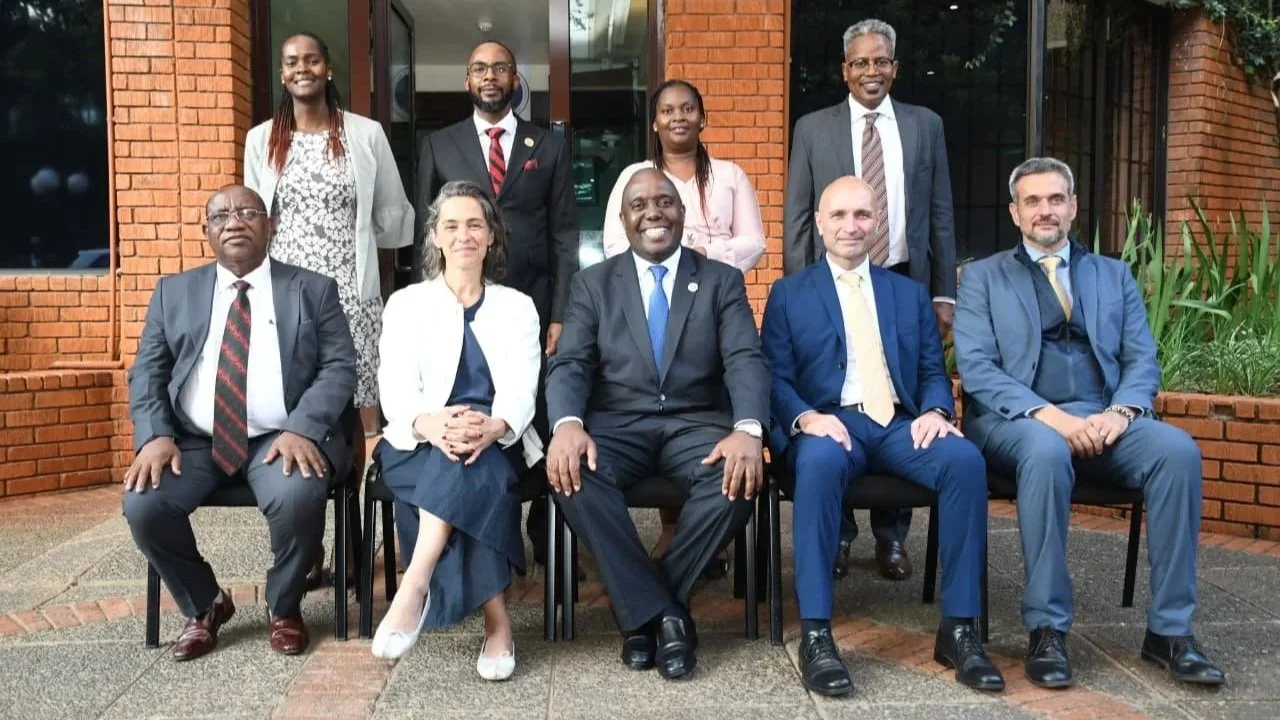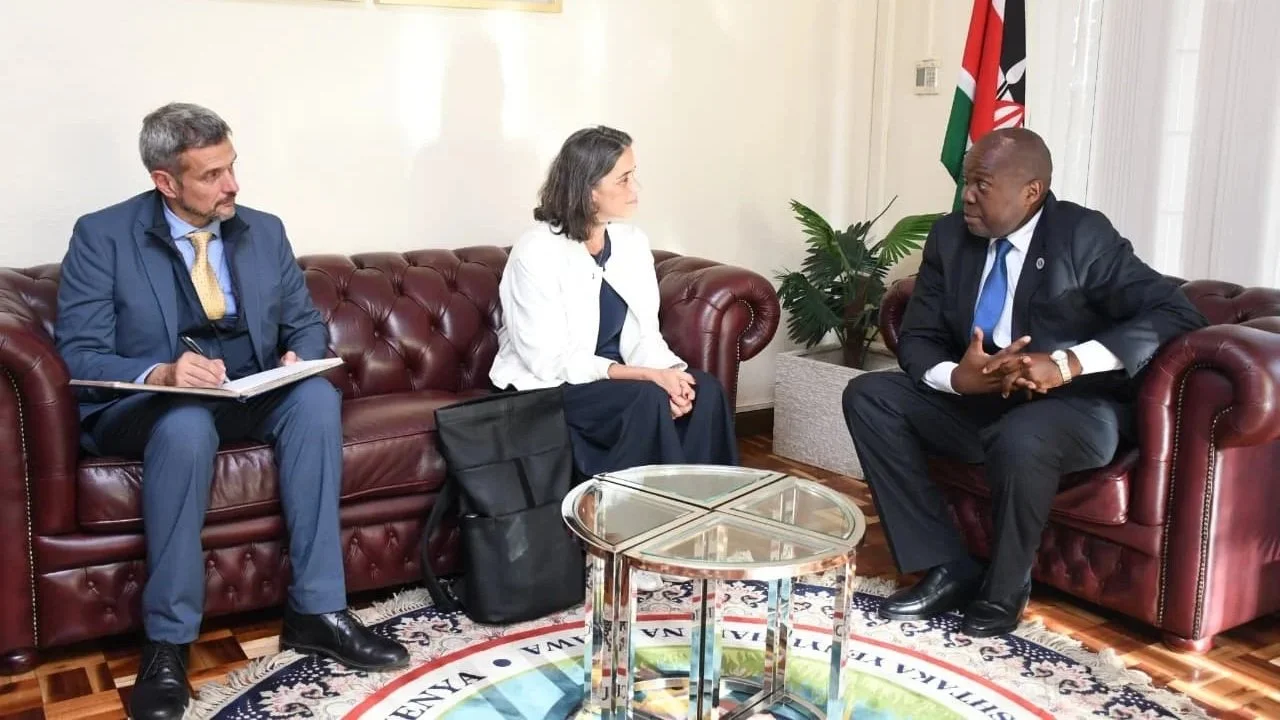
The Office of the Director of Public Prosecutions (ODPP) today hosted a delegation from the European Union-funded ACT Project led by its Project Director, Mrs. Marìa Sánchez Gil-Cepeda, to discuss areas of collaboration between the EU ACT Project and the Eastern Africa Association of Prosecutors (EAAP), which has its Secretariat hosted by ODPP Kenya. The discussions explored potential areas of collaboration, such as capacity building in transnational organized crimes such as trafficking of persons, Counter-Terrorism (CT) with the aspect of cryptocurrency, and piracy.
Mr. Vincent Monda, Ag. Deputy Director of Public Prosecutions in the Department of Regional, County Affairs & Regulatory Prosecutions and ODPP head of Mutual Legal Assistance, who represented the Director of Public Prosecutions, Mr. Renson M. Ingonga, CBS, OGW, who serves as the President of the EAAP, noted that the Eastern Africa Association of Prosecutors has benefited a lot from capacity building by the European Union. He emphasized the need to strengthen the coordination and collaboration, especially in transnational organized crimes in the region.
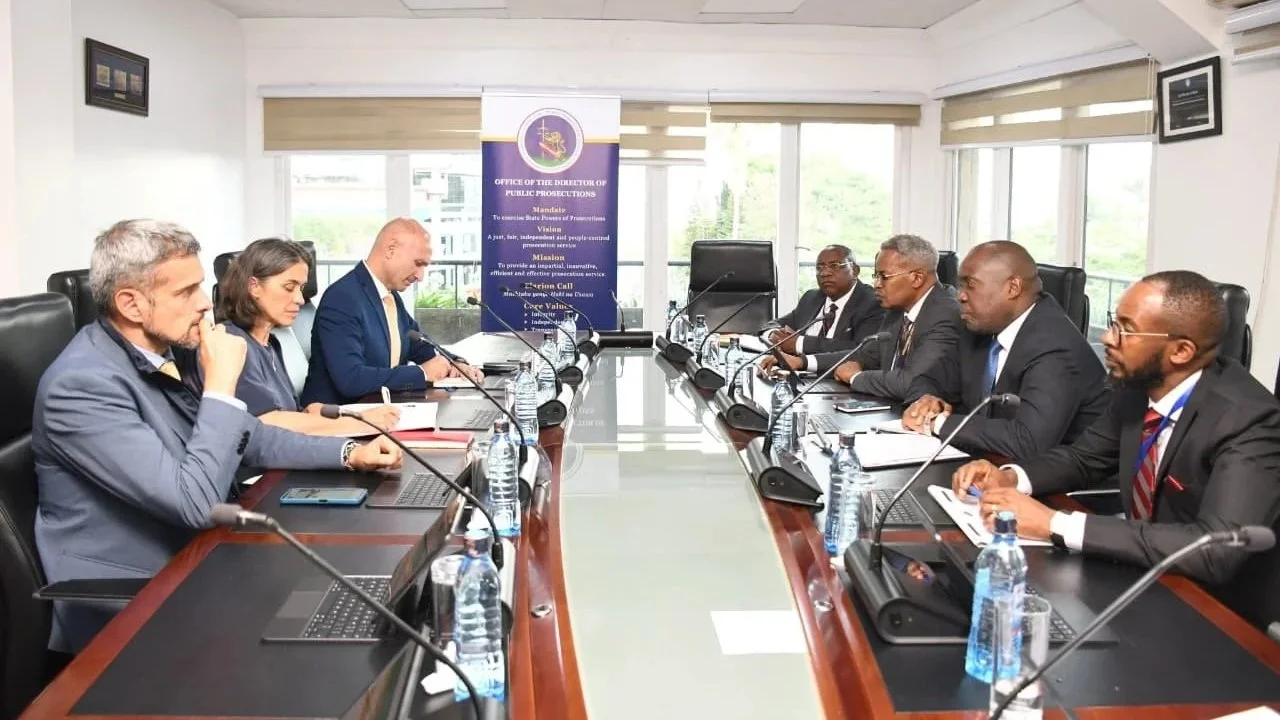
In her remarks, Marìa Sánchez Gil-Cepeda said that in Kenya they have the privilege to partner and collaborate with the security sector, and the main objective of the visit to Kenya was to get feedback and insights about the progress of the ACT (Accountability, Cooperation, and Transnational Crime) Project.
The EU ACT Project is an EU-funded regional initiative designed to strengthen the rule of law, enhance international cooperation mechanisms, and support member states in responding effectively to transnational organized crime. Its primary focus is to enhance mutual legal assistance (MLA), extradition cooperation, asset recovery, and judicial collaboration across jurisdictions.
This engagement marks a significant step towards building stronger networks, capacity building, and ensuring a coordinated approach to knowledge-sharing and cross-border cooperation to combat illicit financial flows, money laundering, and other transnational offences.